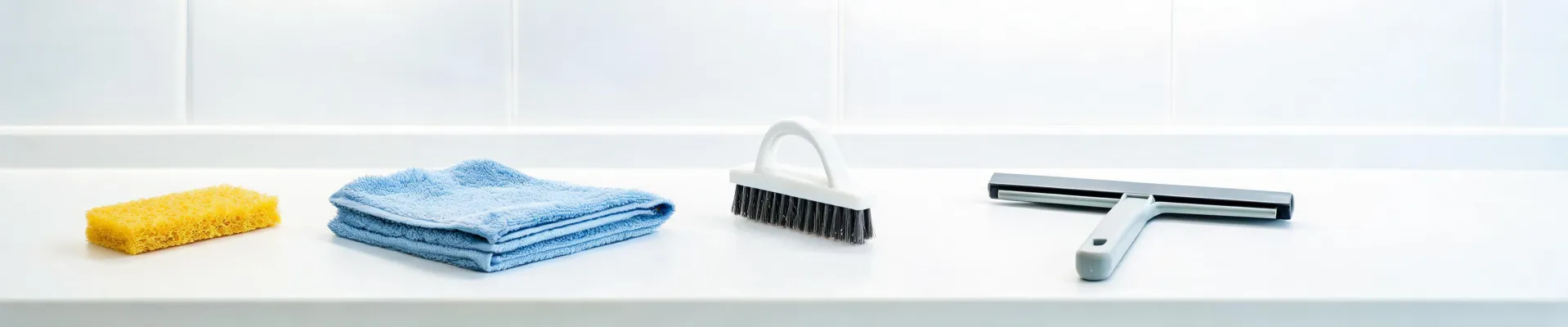
The fastest way to clean a fryer basket is usually the worst way to keep it clean. That sounds backwards, but it's the core problem with how most of us buy scouring pads. We walk down the cleaning aisle, see a stack of abrasive tools under the Scotch-Brite name, and assume they're all the same material with the same toughness. The brand's own product range tells a different story. Scotch-Brite, produced by 3M, includes scouring pads and tools for dish washing and scrubbing, plus industrial discs, belts, and rotating brushes, and the line is deliberately built with varying compositions and levels of hardness. That single fact changes the buying decision. If every pad were equally aggressive, you could pick by price or thickness and be done. But because the line spans soft sponges to heavy-duty scourers, the real question is not 'which Scotch-Brite is strongest' but 'which level of abrasion does this surface need.' The right answer almost never comes from the harshest pad. It comes from matching the tool's scratch profile to the vulnerability of what you're cleaning. For a fryer basket with baked-on oil, that means starting with the least abrasive tool that still lifts the grease.
One Scotch-Brite Tool Won't Fix Every Kitchen Mess
The fastest way to clean a fryer basket is usually the worst way to keep it clean. That sounds backwards, but it's the core problem with how most of us buy scouring pads. We walk down the cleaning aisle, see a stack of abrasive tools under the Scotch-Brite name, and assume they're all the same material with the same toughness. The brand's own product range tells a different story. Scotch-Brite, produced by 3M, includes scouring pads and tools for dish washing and scrubbing, plus industrial discs, belts, and rotating brushes, and the line is deliberately built with varying compositions and levels of hardness. That single fact changes the buying decision. If every pad were equally aggressive, you could pick by price or thickness and be done. But because the line spans soft sponges to heavy-duty scourers, the real question is not 'which Scotch-Brite is strongest' but 'which level of abrasion does this surface need.' The right answer almost never comes from the harshest pad. It comes from matching the tool's scratch profile to the vulnerability of what you're cleaning. For a fryer basket with baked-on oil, that means starting with the least abrasive tool that still lifts the grease.
Why does the strongest-pad instinct persist? Because grease behaves like a stain that needs force, and force feels effective in the moment. You press a heavy-duty scrubber into a crusted basket, hear the scrape, and see the oil release, and your brain registers progress. The problem is that the same scrape is also working on the basket's surface. Non-stick coatings are thin by design, and polished stainless steel can develop fine swirl marks that show up under kitchen light. The grease may be gone, but you've traded a temporary problem for a permanent one. The tension, then, is real: you want speed, and the speed comes with scratches you can't easily undo. This is where Scotch-Brite's tiered lineup becomes useful rather than confusing. Instead of asking which product is the ultimate grease killer, you can ask which product fits the surface you're cleaning. That reframing turns every aisle decision into a small calculation: how vulnerable is this pan, and how much abrasion can it safely take? Once you start asking that question, the product labels start to make sense.
The Scotch-Brite Spectrum: From Gentle Sponge to Heavy-Duty Scourer
That spectrum is wider than most shoppers realize. The same brand that makes the familiar green scouring pad also makes soft, non-scratch sponges for delicate cookware, and it makes dense industrial abrasives for metal finishing. All of them share the Scotch-Brite name, but they are engineered with different compositions and levels of hardness, so they behave differently on a fryer basket. A product that would tear through baked-on oil on bare steel may be far too aggressive for a non-stick surface. The consequence is that the label 'Scotch-Brite' is a category, not a single product. This is exactly why selection has to start with the surface. If you treat every pad as interchangeable, you will occasionally get lucky and clean a cast-iron pan well, but you will also do permanent damage to coated cookware. The brand's intentional tiers are not marketing noise; they are a signal that the right choice depends on the job. Once you accept that hardness varies within the line, the next step is to identify which tier belongs on your fryer basket, and that brings you to the selection filter.
The same move shows up in category guides for other kitchen products. In a well-tested guide to food storage containers, the recommendation is not 'buy the biggest container' or 'buy the cheapest lid'; it is a filter based on what matters for the job: leakproof seals, visibility, and durability. Think about how that filter works. A reviewer does not declare one container the winner for every situation. The best pick earns its spot because it passed the criteria that prevent leaks and keep food fresh. The same filter logic transfers directly to cleaning tools. You do not choose a scouring pad by its color or price; you choose it by surface compatibility, scratch risk, and how easily it rinses clean. The food storage example is useful because it breaks the habit of picking a single 'best' product. A container that is perfect for transporting soup is not necessarily perfect for stacking dry goods in a pantry. Likewise, the pad that removes baked-on fryer grease from an uncoated basket is not necessarily the pad you want on your non-stick stovetop. That is the selection filter: name the surface, name the constraint, and then let the product's abrasiveness line up with it.
Why Scrubbing Harder on a Fryer Basket Can Backfire
Here is what actually happens when you attack a fryer basket with maximum abrasion. The basket is metal, often with a wire mesh or perforated surface, and it has been sitting with carbonized oil. You grab the heaviest scrubber you own, press hard, and the pad grinds through the crust. In the moment, that feels like victory: the oil is gone, the mesh looks bare, and you finish in minutes. But the same friction is also wearing down the metal and, more importantly, the coating of any nearby surfaces. If the basket has a non-stick or ceramic finish, the abrasive pad will gradually strip the coating where the wires cross. If the steel is polished, it will collect fine scratches that become more visible the next time you use it. The result is a circular problem: you scrub hard to clean, and the surface gets rougher, which makes the next cleaning even harder because food sticks into the new scratches. The speed you gained in that first pass is paid back many times over in later cleanings and in the shortened life of your equipment. That is the trade-off nobody mentions on the package.
The better route is to let the pad do less and let heat and chemistry do more. This is the non-obvious judgment that separates a thoughtful kitchen cleanup from a frantic one. A consumer endorsement from a long-term Rubbermaid Brilliance user makes the point in a different context: those containers have been kept for over four years, through two moves, and they still seal tightly and stay clear because the design is built to preserve what is inside. With over 103,000 five-star ratings, the line's reputation comes from people who value durability over flash. The analogy is direct. A storage container preserves baked goods by sealing moisture in; a cleaning tool preserves a pan by removing grease without embedding particles or opening up scratches. When you use a non-scratch Scotch-Brite sponge with hot water and a degreaser, you are not scrubbing the grease off; you are softening it first and letting the pad lift it away. That difference is exactly what keeps the surface intact. The endorsement matters because it shows the same principle in another kitchen category: the best product is not the one with the most aggressive action, but the one that protects the thing you care about while doing its job.
Use a Buyer's Filter: Start with the Surface, Not the Scrubber
A practical filter needs a concrete reference point. The product details for the Rubbermaid Brilliance Pantry Baking Storage Container emphasize tight seals and secure latches that keep food fresh and prevent spills, plus crystal-clear Tritan plastic that makes the contents easy to see and resists stains and odors. Those features are not random; they map directly to what a buyer actually checks: will it close reliably, can I see what is inside, and will it stay looking clean. The same mapping works for Scotch-Brite. For a fryer basket, the three questions are: what is the surface made of, how much coating does it have, and how much abrasion can it safely tolerate? Notice that 'how powerful is the pad' is not on the list. The filter forces you to start with the surface's vulnerability. Once you name that, the correct tier of Scotch-Brite falls out naturally. If the surface is bare steel, you can escalate to a heavy-duty pad. If it is non-stick or polished, you stop at a non-scratch sponge. The mechanism is the same as the pantry container: you begin with what the item needs to stay functional, and then you choose a product that meets that need.
The efficiency argument reinforces the same rule. Rubbermaid's square commercial storage containers offer 25 percent more storage capacity than round containers of similar footprint, simply because the shape was designed to make better use of space. The lesson is not that square is always better; it is that structural choices can improve results without requiring more effort. For cleaning, the structural choice is the abrasive's hardness. A non-scratch pad is not a weaker tool; it is a tool that uses a different mechanism to get the grease off. By soaking the basket in hot water and letting a degreaser break down the oil, you create the conditions where a gentler pad is faster overall. The derivation is simple: soften first, match the pad to the surface, and escalate only when the gentler option genuinely fails. This rule keeps the tool working with the surface rather than against it, which is why it holds up across baskets, stove grates, and even stainless steel pots.
The Verdict: Start Soft, Escalate Deliberately
The verdict is direct. The same mechanism that guides food storage picks—identify the essential criteria, then match the product to them—applies to Scotch-Brite. For a fryer basket, the essential criteria are surface material, coating type, and the kind of residue you are removing. If the basket is bare metal, a heavy-duty scourer is defensible because the surface can take it. If the basket is non-stick or ceramic-coated, a non-scratch Scotch-Brite sponge is the right call, and you should pair it with hot water and a degreaser rather than extra elbow grease. If the pan is polished stainless steel, stay in the middle: use the gentlest pad that still clears the oil, and test on a small area first. That is the whole filter. The brand's intentional range of compositions and hardness levels is not a complication; it is the feature that makes this kind of matching possible. You do not need one ultimate pad. You need to understand where the pad you are holding sits on the spectrum and whether that position matches the surface in front of you.
The boundary conditions are worth stating clearly, because they keep the verdict from becoming another blanket rule. For baked-on grease on a non-stick fryer basket, do not escalate to a metal pad. Once the coating is scratched, it will release particles into the oil and become harder to clean with each use. For a bare cast-iron or uncoated steel basket, a heavy-duty pad is safe, but it still does not need to be your first stop; a short soak in hot, soapy water will release most of the oil, and the pad can finish the job without grinding. For stainless steel surfaces, avoid circular scrubbing that leaves visible swirl marks; follow the grain of the metal if you can see it, and use a non-scratch pad unless the buildup is genuinely carbonized. And for any surface, rinse the pad thoroughly after use so embedded grease and particles do not get dragged across the pan the next time. These conditions are the verdict's protective shell: they tell you exactly when 'start soft, escalate deliberately' applies and when it does not.
The verdict, then, is a rule rather than a product: match the pad to the surface, start gentle, and escalate only when the gentle tool genuinely fails.

Ingrid Falk
Ingrid Falk is an outdoor living products analyst specializing in fences, pergolas, gazebos, canopies, greenhouses, shade sails, patio sets, outdoor sofas, and weatherproof cushions. She uses ISO 4892-2 and ASTM G154 weathering methods while comparing UV color change, coating adhesion, corrosion resistance, frame load, joint stability, water shedding, and dimensional movement. Her work helps garden retailers, project buyers, and hospitality operators select structures and furniture suited to wind exposure, climate, installation method, maintenance, and expected occupancy.