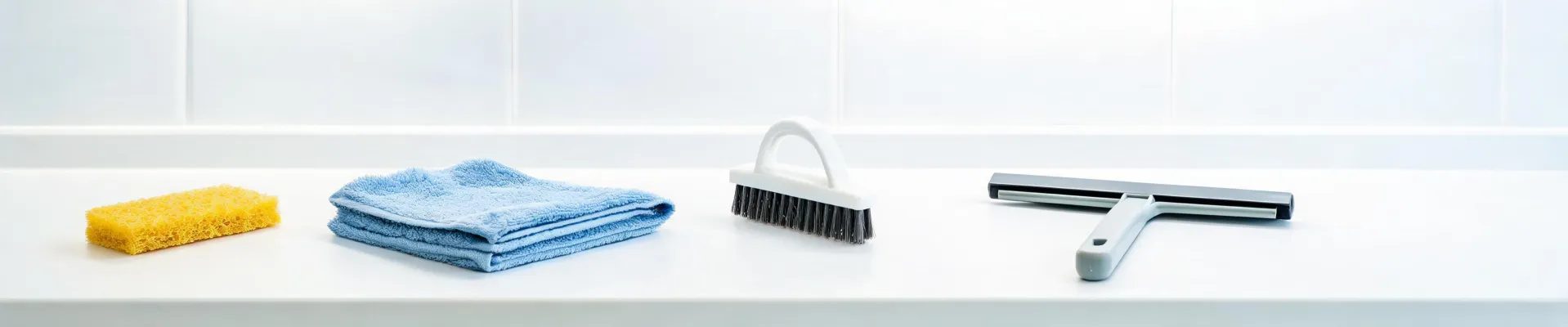
Two sponges sit on the same kitchen counter for two weeks. One has ridden the dishwasher's top rack every Saturday night, and it still pulls suds in two passes and squeezes out light. The other has only ever been rinsed under the tap and wrung into the sink, and by day ten it is slick, heavy, and refuses to foam no matter how much soap you grind into it. Same product, same house, same fourteen days. The difference is the routine, not the fiber.
The Scotch-Brite Ocelo multipurpose sponge is worth selecting only if you will actually run it on the dishwasher's top rack. Strip that routine away and its 100% plant-based fiber and its quick-soak design do not beat a plain cellulose sponge you can buy three for a dollar. So the question at the shelf is not how absorbent the sponge is — every sponge is thirsty on day one. It is whether you will do the one maintenance step the packaging spells out, and whether the rest of your sink work fits the face it comes with.
Why Day-One Absorbency Picks the Wrong Sponge
Scotch-Brite describes the Ocelo as designed to soak up water and suds quickly for efficient, non-scratch cleaning. Read that as a description of a fresh sponge, not a lifetime spec. A dry cellulose-type sponge will drink anything you put near it, which is exactly why the shelf test fails.
The mistake is picking by squeezing a dry sponge in the aisle. Every candidate feels thirsty in your hand, so you buy on day-one feel and then blame the sponge in week three, when grease and a film of food have coated the open cells and the suds collapse on contact. You did not buy a bad sponge; you bought with the wrong criterion.
Choose on refreshability instead, and put the criteria in order. First: will this sponge get a refresh that resets the cells? Second: does its face match the surfaces you actually wash? Day-one soak never makes the list. The gap you saw on the counter after two weeks — one sponge still foaming, one going slick and sour — is precisely what the first criterion is testing for.
The obvious objection is that every sponge soaks up water, so what is special here? The claim pairs quick soak with non-scratch, and the pairing is what you are selecting for. Around nonstick skillets and drinking glasses you want a face that holds soapy water and will not gouge the surface. A stiffer sponge soaks fine and scratches; a scrubber pad does not scratch less, it scratches by design.
Plant-Based Fibers Aren't a Compost Promise
Scotch-Brite states the sponge fibers are made from 100% plant-based fibers for a sustainable clean. Take it as sourcing, not end-of-life. It tells you where the fiber came from. It does not say the finished sponge breaks down in your sink, and it does not put it in the compost.
The reflex is to drop the spent sponge into the compost bin or the yard-waste pile because the word plant-based was on the wrapper. The consequence surfaces two weeks later as a sour smell in a bin you meant to keep clean, plus a plastic-bound scrub layer that was never going to rot while the fiber around it did.
Line up the three candidates you actually have. There is the Ocelo multipurpose sponge, a generic cellulose sponge from the grocery aisle, and a heavy-duty scouring pad. The generic cellulose sponge is wood-pulp based too, so plant-based is not by itself a differentiator, and you are not really choosing plant fiber over plastic fiber here. What separates the Ocelo is the non-scratch face plus a documented top-rack refresh routine. The scouring pad separates itself in the other direction: it will eat carbonized food, and it will eat your nonstick coating with it.
So the honest read on the fiber claim is that you are paying for a nameable fiber source and a maintenance routine, not for compostability. If a sponge that disappears in a compost heap is the thing you want, this is not that sponge, and no amount of plant-based wording on the wrap changes it.
The Top-Rack Rule That Decides Your Pick
The instruction is specific: easily clean and refresh the dish sponge by placing it on the top rack of the dishwasher. Note the rack. The top rack sits away from the heating element and the hardest spray, which is why a foam-and-fiber sponge survives it and does not survive the bottom.
The mistake is treating the line as a suggestion and reaching for the microwave or the bottom rack instead. The microwave gives you a warped foam block and a fiber layer that turns brittle and starts shedding; the heated bottom rack does the same thing faster and can leave a bleach or rinse-aid residue you then wipe across a plate. Either way you throw the sponge out early, which is the exact cost the top-rack routine was supposed to remove.
The routine takes about ten seconds. Rinse the sponge under hot water, squeeze it out so it is not carrying yesterday's dishwater, set it upright in the top rack before you start the load, and let it air-dry after so the bottom face is not sitting in a puddle. Once a week is enough for a household running a load every day or two. Never the bottom rack. Never the microwave.
That routine is what decides the recommendation. The Ocelo earns its place when a dishwasher load is already part of your week and nonstick pans or glass come through the sink: you spend a slot in a load you were running anyway and get a non-scratch face that gets reset instead of going sour. It loses its case when you hand-wash only, or when most of your sink work is rescuing burnt pans — there the sponge never gets refreshed and the abrasion you actually need is not on this product at all.
A skeptic would say running the dishwasher for one sponge wastes water and energy. That holds only if you would fire a cycle for the sponge alone. The sponge rides a load you were already running, so the cost is one upper-rack slot, not a cycle. Run the machine once a week for a family of four and the refresh is free; hand-wash everything and run it twice a month for storage jars, and the arithmetic flips and this sponge loses its main advantage.
Non-Scratch Has a Ceiling
The same line that promises a quick soak promises non-scratch cleaning, and that word is a limit as much as a feature. Non-scratch means the face will not gouge a nonstick coating or haze a drinking glass. It also means the face is not built to abrade carbonized food.
It is easy to read multipurpose as handles everything and go after a burnt-on pan with the soft face. My own version of this: a pot of oatmeal left on the stove until the bottom set, then scrubbed with the soft side for a full minute. The starch did not lift, it smeared, and the sponge came away loaded with oil so that it would not foam for the next two days. I had not cleaned the pot and I had ruined the sponge's next shift.
The correct pairing is this sponge for daily dishes and a separate scouring pad kept for burnt pans. Two tools, two jobs. The soft face handles plates, glasses, and the nonstick skillet after eggs; the scouring pad takes the carbonized oatmeal, and you accept that it is aggressive enough to mark a coated pan if you use it there.
Here is the trade in plain terms. You gain a face that will not scratch your nonstick or your glassware, a fiber source you can actually name, and a refresh step that turns a sponge from a weekly throwaway into a monthly one. You give up scouring power, any compost story, and the assumption that a kitchen with no dishwasher can use it well. If the top rack is already in your week, this is a straight upgrade — buy it, and keep a scouring pad beside the sink for the burnt messes. If it is not, the cheap cellulose sponge does everything this one can honestly do for you.

Mateo Rivas
Mateo Rivas is a garden watering and irrigation analyst covering drip systems, emitters, garden and soaker hoses, hose reels, sprinklers, nozzles, misting systems, and watering cans. He applies ISO 9261 test methods while examining emitter discharge, pressure compensation, flow uniformity, burst pressure, kink resistance, spray pattern, filtration needs, and water-use efficiency. He helps growers, landscapers, distributors, and homeowners size zones and select components for available pressure, planting layout, climate, water quality, and maintenance access.