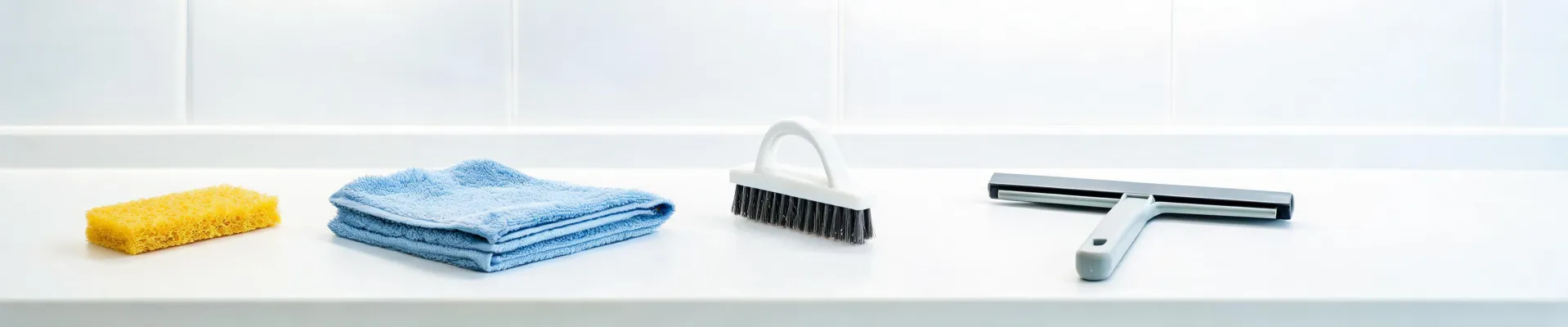
The common wisdom in most kitchens is that the tougher the scouring pad, the better the clean. If a stain survives, the instinct is to reach for something harsher. That conviction feels practical, but it is exactly wrong for the growing family of coated cookware. I’m not suggesting that abrasive cleaning tools have no place—they certainly do on cast iron and raw metal. The real question is whether more hardness always translates into a cleaner surface. It does not. Hardness without a matching surface is less a cleaning plan and more a recipe for stripped seasoning, scratched enamel, and dull nonstick coatings. The debate is not between “strong” and “weak” cleaners; it is about fit. And once you start thinking in terms of fit, a brand like Scotch-Brite stops looking like a single product and starts looking like a system of options. That system is worth understanding, because it determines how long your pans survive.
Hardness Without Match Is Not Strength
Most kitchens operate on a familiar assumption: the tougher the scouring pad, the better the clean. When a stain resists, the reflex is to grab something harsher. That instinct feels sensible, but it fails the moment coated cookware enters the picture. I’m not arguing that abrasive cleaning tools have no role—they do on cast iron and raw metal. The real question is whether more hardness always produces a cleaner surface. It does not. Hardness without a matching surface is less a cleaning plan and more a recipe for stripped seasoning, scratched enamel, and dull nonstick coatings. The debate is not between “strong” and “weak” cleaners; it is about fit. And once you start thinking in terms of fit, a brand like Scotch-Brite stops looking like a single product and starts looking like a system of options. That system is worth understanding, because it determines how long your pans survive.
The underlying structure of that system is documented by the brand’s own history. Scotch-Brite, as the Wikipedia entry on the brand notes, is a line of abrasive products produced by 3M. The product line includes scouring pads and tools for home uses such as dish washing and scrubbing, as well as various types of surfaces for industrial applications, such as discs, belts, and rotating brushes, with varying compositions and levels of hardness. This is more than a brand trivia fact; it changes the entire decision matrix. If a manufacturer deliberately produces multiple hardness levels, then the choice of a pad is not about finding ‘the strongest one’ but about finding the level that matches the task. The same Wikipedia entry repeats the point when it describes the same product line as covering home and industrial uses, confirming that the line is engineered for different substrates rather than for a single all-purpose scrub. For the home cook, that means the first question is not ‘how tough is this pad?’ but ‘what is my surface made of?’
The Logic Beneath the Surface
The most stubborn myth is that all Scotch-Brite pads are essentially the same—just different colors or thicknesses. This misbelief survives because the visual difference between a green pad and a blue sponge seems cosmetic. But if the brand makes pads across a range of hardness levels, as its own material states, then the color coding is not decoration; it is an engineering specification. Treating every pad as interchangeable is how a nonstick skillet ends up with fine scratches that later trap food and lose their release. The mistake is not in choosing a soft pad when a tough job appears; the mistake is in assuming that a tough pad is automatically the right tool. The moment you accept that hardness is a variable, you escape the trap of buying by color and start buying by surface. And once that premise is accepted, the next step—matching the abrasive to the material—becomes a simple question of knowing your cookware. It is a question that can be answered once you learn the basics.
The matching principle follows directly from the brand’s own design philosophy. Because Scotch-Brite is produced with varying compositions and levels of hardness, the appropriate choice for your cookware is the one whose hardness is lower than the surface it touches. For a seasoned cast-iron skillet, a heavy-duty pad can safely remove carbonized oil because the iron’s hardness exceeds the abrasive’s. For a nonstick frying pan, the coating is far softer, and any pad with grit hard enough to abrade it will leave permanent damage. This is not a matter of brand preference; it is a mechanical relationship between two materials. The same brand that offers a heavy-duty floor strip also makes a delicate non-scratch sponge precisely because kitchens contain both extremes. Recognizing that range turns a shopping decision into a calculation: what is the surface, how much hardness can it tolerate, and what level of soil is actually present? If you are unsure, the conservative answer is to start with the softer option and escalate only when needed. This escalation is the core of surface matching: use the gentlest tool that works, and reserve the heavy-duty pad for the hardest surfaces.
A Decision Frame for Comparing Your Options
When you compare cleaning tools, the same logic applies as when you compare food-storage containers. In a hands-on review of a popular 10-piece container set, the Rubbermaid Brilliance set earned a 4.6 score across 28.9k ratings on Amazon because reviewers weighed multiple factors: stain resistance, seal security, and ease of cleaning. The reviewer specifically noted that the latches can be stiff when new but loosen after a few months, which is the kind of trade-off that matters in daily use. A cleaning pad should be evaluated the same way—not by a single attribute like color or thickness, but by how it balances aggressiveness, surface compatibility, and longevity. The container review demonstrates that a product’s true quality emerges only when you look beyond the headline spec and consider the full context of use. For scouring pads, that means comparing how each grade behaves on your actual pans, not just how it looks in the aisle. That comparison includes a crucial step: checking the pad’s intended surface labels, which most manufacturers print on the package. And doing so will save you money in the long run.
A decision rule emerges when you look at how a single spec can change a product’s usefulness. Rubbermaid’s commercial square containers, for example, claim a 25% greater storage capacity than round ones of the same footprint, according to the product’s own specifications. That kind of quantified comparison is exactly what shoppers need for cleaning tools, but it is rarely provided. The rule I propose is a three-step check: identify the surface material, assess the soil level, and then select the gentlest abrasive that will handle the job within a reasonable number of passes. The ‘25% more capacity’ example matters because it shows that a detail as small as shape can shift a decision. Likewise, a pad’s hardness rating, if disclosed, would be the decisive detail. Since most packaging does not print a hardness scale, you can approximate it by testing on an inconspicuous spot—knowing that this test itself is a safe way to build the same decision rule. The key is to make the implicit explicit, so that choosing a pad becomes as rational as choosing a container size. That is the whole principle.
The Fryer Scene: Matching in Action
Now apply the rule to the messiest job in the kitchen: the fryer. A deep fryer’s interior collects a layer of oil that polymerizes into a dark, tacky carbon after repeated use. Picture the scene: you’ve just drained the oil, and the inside wall is coated with a brown-black film that will not budge with a sponge. The natural reaction is to reach for the heaviest duty pad on the shelf. But the safe move depends on the fryer’s material. If your fryer has a nonstick coating—common in home models—a heavy abrasive will cut through the carbon but also through the coating, leaving bare metal that rusts and bonds with the next oil batch. If your fryer is bare stainless steel or cast iron, the same pad is the right call. The condition that changes the verdict is the surface, not the stain. So before scrubbing, test a small area with a soft sponge; if the carbon lifts without excessive force, you probably don’t need the heavy pad at all.
Even the best cleaning advice is worthless if the tool is unpleasant to use. In a review of food-storage containers, one editor explained that she kept her Rubbermaid set for years because they are dishwasher- and freezer-safe and stack neatly—convenience details that outweighed any single performance metric. The same principle applies to fryer cleanup. A pad that’s technically effective but awkward to hold, disintegrates mid-scrub, or leaves fibers behind will get abandoned after one use. The Southern Living review noted that the containers had over 103,000 five-star ratings, a signal that real people value the same convenience factors. When you clean a fryer, the effective technique is often to let a warm, soapy soak loosen the carbon first, then use a pad with a scraping edge or a stiff brush for the corners. The tool should match the surface, as argued above, but it must also fit your hand and your patience. If a product feels like a chore, you’ll eventually stop using it, and the fryer will win. That is a small detail that determines whether the system works.
The Verdict: A Decision Matrix
Here is the verdict: stop buying scouring pads by color and start buying them by surface. For bare cast iron and stainless steel fryers, a tough Scotch-Brite pad is not only acceptable—it’s the most efficient way to strip carbonized oil. For nonstick cookware, ceramic-coated pans, and any surface labeled ‘soft-touch,’ the only responsible choice is a non-scratch pad or sponge designed for coatings. The middle ground—everyday dishes, glass, and stovetops—can usually be handled with a medium pad that balances abrasiveness and safety. This is the central thesis: the abrasive’s hardness must be matched to the surface, not selected for maximum strength. That principle will not settle every argument about which brand is best, but it tells you how to think through the problem, and it protects your cookware from the most common cleaning mistake. The verdict is not ‘buy the hardest pad’ or ‘buy the softest’; it is ‘buy the right pad for the material in front of you.’ That rule matters because it changes both speed and safety in a routine chore, and it is the difference between a damaged pan and a clean one.
This verdict comes with boundaries as important as the rule itself. Matching hardness to surface assumes you know exactly what your cookware is made of, which is not always the case. A pan that looks like bare metal may hide a nonstick coating or a brittle porcelain finish. When in doubt, check the manufacturer’s instructions, or pick the gentler option—a scratch is permanent, while an extra scrub pass only costs a few minutes. The framework also does not excuse poor technique. Even a correctly matched pad can damage a surface if you press too hard or use a sawing motion on a delicate coating. The rule works best when you let the tool do the abrading and keep pressure light. Finally, no pad can revive a worn-out nonstick surface; once the coating is gone, it is gone. So treat surface matching as a way to extend the life of your pans, not as a cure for existing damage.
The boundary of this verdict is as important as the verdict itself. Matching hardness to surface assumes you know the exact composition of your cookware, which is not always clear. A seemingly metal pan may have a hidden nonstick coating or a brittle porcelain finish. When in doubt, consult the manufacturer’s instructions, or default to the gentler option—a scratch is irreversible, while an extra scrub pass only costs time. Also, this framework does not excuse poor technique. Even a correctly matched pad can damage a surface if you bear down with excessive force or use a circular sawing motion on a tender coating. The rule works best when you let the tool do the abrading and keep pressure moderate. Finally, no tool replacement will fix worn-out nonstick surfaces; once the coating is gone, no pad will save it. So treat surface matching as a way to extend the life of your pans, not as a cure for existing damage.

Ingrid Falk
Ingrid Falk is an outdoor living products analyst specializing in fences, pergolas, gazebos, canopies, greenhouses, shade sails, patio sets, outdoor sofas, and weatherproof cushions. She uses ISO 4892-2 and ASTM G154 weathering methods while comparing UV color change, coating adhesion, corrosion resistance, frame load, joint stability, water shedding, and dimensional movement. Her work helps garden retailers, project buyers, and hospitality operators select structures and furniture suited to wind exposure, climate, installation method, maintenance, and expected occupancy.