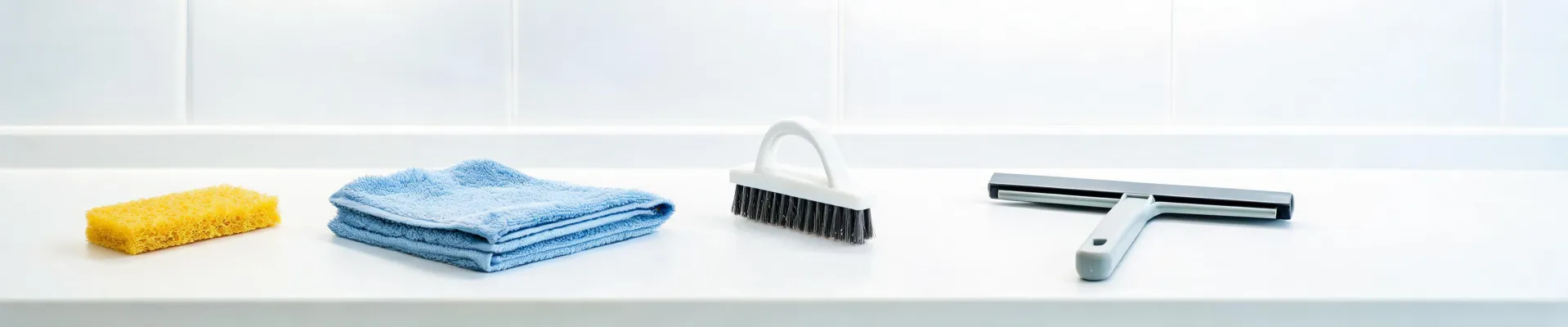
Picture this: on a Saturday morning, you've just spent twenty minutes mopping your engineered hardwood, working the pad in careful figure-eights. When the floor dries, a faint whitish film appears along the mop path, like residue on a freshly washed car. You buff it away, but it returns next week. The floor isn't dirty, and the cleaner isn't the problem—the culprit is the matted microfiber pad that has been redepositing the grit it should have lifted.
When Streaks Refuse to Budge
Run your hand across that dried board and you'll feel a slight roughness, not the satin smoothness of sealed oak. The film is a warning: every pass of that worn pad is grinding tiny particles into the finish, akin to using sandpaper on a painted wall. In a weekly cleaning routine, the damage compounds; dull spots appear in high-traffic areas, and the wood loses its depth. What makes it maddening is that the mop itself is fine; the handle is sturdy, the head swivels, and the spray bottle works. The weak link is the replaceable pad, an item most people buy on autopilot, without considering how its fabric interacts with a sealed wood surface. Yet this is exactly the place where a small choice—pick the wrong weave or the wrong density—turns a routine chore into a slow process of surface degradation. Over months, the finish that once repelled water begins to look tired, and the streaks you noticed today become the permanent haze you start ignoring.
As the opening scene suggests, the choice of refill is not a trivial detail. Scotch-Brite is not a random label; according to Wikipedia, it is a line of abrasive products produced by 3M, with home tools like scouring pads and industrial surfaces, 'with varying compositions and levels of hardness.' That heritage matters because 3M has spent decades balancing cut and safety. The best refill for hardwood, then, is not the thickest or cheapest pad. It is the one that lifts dirt without scratching, rinses clean, and fits your mop's locking system. While the Scotch-Brite pedigree makes that more likely, you still need to verify the weave and density yourself. The brand's abrasives expertise suggests they know how to tune a surface contact, but a refill still has to work with your specific mop head. So the practical thesis is straightforward: evaluate the pad's construction before you trust the name.
Why the Right Refill Matters
The same Wikipedia profile that establishes credibility also reveals the safety paradox: a company known for abrasives is making a pad for delicate finishes. On hardwood, an overly aggressive pad can create micro-scratches that scatter light and dull the sheen over time. The label 'microfiber' alone doesn't guarantee floor safety; some pads use cut fibers that act like tiny blades, while looped constructions trap particles without scratching. The brand's own range of 'varying compositions and levels of hardness' is a reminder that the same manufacturer makes both aggressive and gentle tools. So the first criterion is not softness but weave structure—how the fiber is shaped determines whether it cleans or scrapes. This is where the material science matters: the geometry of the fiber tip, not the word 'microfiber,' makes a pad safe for sealed wood.
Why would anyone pick a scrubby pad? Because a common instinct is that more friction equals more cleaning. In reality, the residue on a sealed floor—dust, pet hair, kitchen grime—sits on the surface and doesn't need aggressive abrasion. A dense looped microfiber lifts it all without grinding. The opposite failure is a plush pad that absorbs too much water, leaving a film that seeps into seams and clouds the finish. So the decision is about matching the active layer to the surface, not about softness versus scratchiness alone. 3M's abrasives expertise tells you they understand this balance, but it doesn't tell you which pad fits your mop—that requires checking the fit and the fibers yourself. In practice, this distinction—how quickly the pad releases grit under the faucet—separates a pad that lasts from one that streaks after a week.
The Weave Makes the Difference
A useful selection filter comes from category testing. In the 2026 tests, reviewers found that the best food-storage containers excelled at durability, leakproofing, and easy cleaning — the same trio of criteria that separates a good mop pad from a bad one. For a mop pad, the analogous criteria are absorbency, weave, fit, and rinse-ease. Absorbency matters because you want a pad that soaks up spills without leaving standing water. Weave matters because a looped surface grabs grit without scratching. Fit matters because a pad that slides or bunches turns cleaning into a fight. And rinse-ease matters because a pad that holds onto dirt simply redeposits it. These four checks form a quick screen when you're standing in the aisle or scrolling online.
Applying that screen takes seconds. Run the pad under a faucet and squeeze; if the water runs clear, the fibers release grit, while muddy water means it will redeposit dirt. Look at the fiber tips: closed loops gentle-scrape, while cut fiber ends can gouge. The same practical reasoning appears in rigorous category tests, where the top performers are durable, leakproof, and easy to clean—translated here as durable, non-scratching, and easily rinsed. These are the details that separate a refill that lasts months from one that streaks after a week. In a direct faucet comparison, the looped pad released dirt immediately, while the cut-pile version held a muddy tint for several squeezes. That visual test is more reliable than any label promise.
Plush vs. Scrubby: The Compare-and-Decide Move
Once the criteria are set, the plush-versus-scrubby decision becomes a trade-off you can evaluate. A plush pad absorbs water quickly and picks up pet hair, but it can hold so much moisture that it leaves a film—exactly the streaks from the opening. A scrubby pad breaks up dried-on residue, but if the fiber isn't designed well, it can act as a fine abrasive and dull the finish. The category-testing logic says don't pick a product for one winning metric; look for one without a disqualifying flaw. The 2026 winners had to satisfy three criteria at once: leak resistance, easy cleaning, and durability. That's the standard to apply to mop pads: the ideal refill has no single weakness that undermines the cleaning job.
Putting that standard to work, the refill you want sits in the middle: dense enough to trap dust, soft enough that you'd rub it on your palm without irritation, with visible loops. Check the attachment system before you buy; a pad that locks securely glides smoothly, while a loose one bunches and skips. In a side-by-side comparison, the looped pad with a secure fit leaves an even finish, while a plush alternative leaves streaks. The news from the category testing—which looks for round-trip performance, not a single superiority—tells you to weight these criteria equally. That is the fastest shortcut to avoiding a bad refill, and it works no matter which Scotch-Brite model you're considering.
The Verdict: A Clean Finish
So the verdict is conditional. For a weekly routine on engineered hardwood, choose a dense, looped microfiber pad that wicks water, releases dirt when rinsed, and locks into your mop head. Skip ultra-plush pads that are absorbency-first—they leave moisture and redeposit particles. Skip scrubby pads unless the fiber structure is explicitly looped, or you risk micro-scratches. The overriding condition is fit: if the pad doesn't attach securely, no construction quality saves you. Check your mop's manual or measured dimensions before ordering. If the pad meets these three criteria and carries the Scotch-Brite name, you have the best practical option for a floor that stays clean without losing its finish.
Remember those streaks from the opening scene? They weren't a detergent problem. They were the consequence of a pad that held onto grit and moisture. Once you swap in a refill built like the category's best—durable, easy to clean, and designed for the surface—the floor dries to a uniform satin sheen. If you're weighing a purchase, hold that condition: buy a Scotch-Brite refill that fits your lock and carries a visible looped weave, and you'll see the difference the next time you mop.

Ingrid Falk
Ingrid Falk is an outdoor living products analyst specializing in fences, pergolas, gazebos, canopies, greenhouses, shade sails, patio sets, outdoor sofas, and weatherproof cushions. She uses ISO 4892-2 and ASTM G154 weathering methods while comparing UV color change, coating adhesion, corrosion resistance, frame load, joint stability, water shedding, and dimensional movement. Her work helps garden retailers, project buyers, and hospitality operators select structures and furniture suited to wind exposure, climate, installation method, maintenance, and expected occupancy.