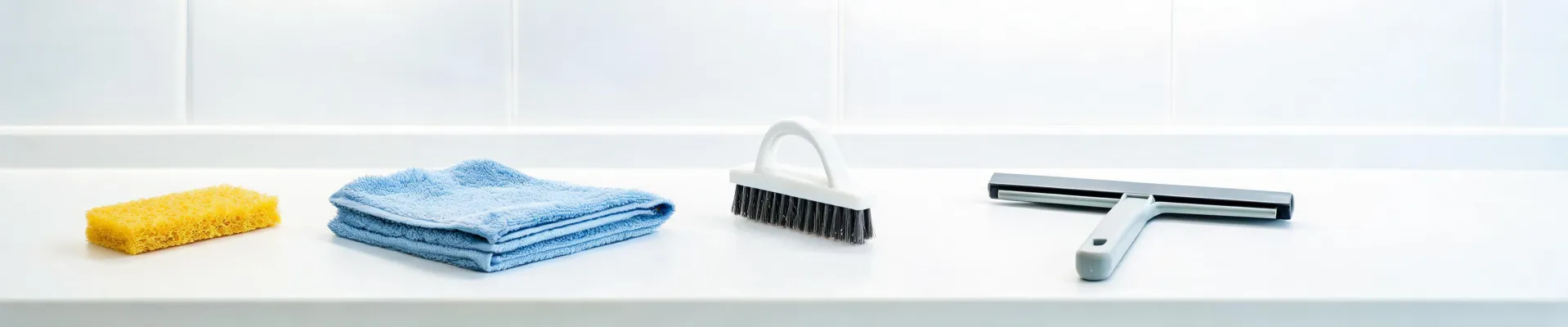
The right Scotch-Brite fryer cleaning tool isn't the most abrasive one—it's the one that matches your fryer's surface finish. Most people reach for the harshest pad first, and that habit is exactly why their baskets end up scratched and their next batch of fries tastes like burnt residue. Scotch-Brite, a 3M product line, isn't a single pad; it's a family of abrasive tools with different hardness levels for different surfaces. That range exists for a reason: the pad you choose should be dictated by the finish you're cleaning, not by how stubborn the grease looks. Grabbing the toughest scrubber treats every fryer like a cast-iron skillet—and most fryer baskets are nothing like cast iron. This mismatch is the root of most fryer-cleaning frustrations. Yet the solution is right in front of you—if you know which layer of the Scotch-Brite lineup to grab.
Why Most Fryer Cleaners Fail (and Why the Harsh Ones Do More Damage)
The most abrasive Scotch-Brite pad isn't automatically the best fryer cleaner—the right choice depends on your fryer's surface finish. Most people reach for the harshest pad first, and that habit is exactly why their baskets end up scratched and their next batch of fries tastes like burnt residue. Scotch-Brite, a 3M product line, isn't a single pad; it's a family of abrasive tools with different hardness levels for different surfaces. That range exists for a reason: the pad you choose should be dictated by the finish you're cleaning, not by how stubborn the grease looks. Grabbing the toughest scrubber treats every fryer like a cast-iron skillet—and most fryer baskets are nothing like cast iron. This mismatch is the root of most fryer-cleaning frustrations. Yet the solution is right in front of you—if you know which layer of the Scotch-Brite lineup to grab.
The failure pattern is easy to see if you watch how people clean. They take the scouring pad that says 'heavy duty' and bear down on a non-stick basket, thinking more pressure means less work. What actually happens is that the coarse abrasive gouges the coating, creating microscopic scratches. Those scratches become hiding spots for oil and food bits. On the next heating cycle, the residue bakes and burns, which produces exactly the smoke and smell that made you clean in the first place. So the harsh pad doesn't just fail to clean—it manufactures new dirt. The surface finish is not a minor detail; it's the main variable that determines which abrasive level is safe. Cleaning is a two-way interaction: the pad removes soil, but it also removes a tiny layer of the surface. On delicate coatings that layer is your non-stick protection. Over time, a heavy pad can turn a smooth basket into a rough one, making every future clean harder.
What Actually Sticks to Your Fryer Basket
What actually sticks to your fryer basket after a long frying session? It's not just oil; it's a film of polymerized fat that has been baked into the metal. If you've ever let a basket sit overnight after frying, you know that the brown spots turn into a hard, glassy layer that won't budge with a simple wipe. That layer is the result of high heat converting oils into a new material with different properties than the liquid fat you started with. Picture yourself after frying chicken: the basket is covered in browned oily patches. You run hot water, you squirt soap, and the pad seems to glide over the spots. The urge to switch to the scratchiest pad is almost reflexive. But that reflex skips a crucial step: identifying what's stuck and what it's stuck to.
The mechanism explains why surface matching matters. When oil is heated above its smoke point, it polymerizes—molecules link into chains that form a hard, sticky film. This film bonds to whatever surface is beneath it, and the bond strength depends on the surface finish. On a smooth, non-stick coating, the film adheres differently than on raw stainless steel. An aggressive pad can break the film loose from a tough surface, but on a soft coating it strips the coating along with the grime. That's why a lower-abrasive tool can actually outperform a heavy pad: paired with heat and a soak, the non-scratch structure lifts cooked-on grease by softening the polymer, then gently persuading it off. For example, a structured non-scratch scrubber with light abrasion has more contact points than a flat sponge; it can work soap into the film and lift it without cutting into the coating. So the real question isn't 'how hard can I scrub?' but 'how does this surface want to be cleaned?'
The 3-Way Comparison: Heavy-Duty, Non-Scratch, and Multi-Purpose
When you line up the heavy-duty pad, the non-scratch sponge, and the multi-purpose scouring pad, you're not choosing between levels of strength—you're choosing between hardness levels that correspond to different surfaces. The heavy-duty pad is built for cast iron and steel, where deep scratching is harmless or even helpful for seasoning. The non-scratch sponge, often made from a fine mesh or textured fiber, is designed for non-stick and enameled coatings; it can dislodge softened grease without leaving micro-abrasions. The multi-purpose pad sits in between: it handles stainless steel and aluminum without being so coarse that it dulls them. Scotch-Brite offers this full range because a one-pad solution doesn't exist. Each hardness level is a calibrated tool, not a compromise.
Independent kitchen gear reviews consistently favor durable, stain-resistant, easy-to-clean designs—and that pattern transfers directly to cleaning tools. Look at how reviewers talk about food storage containers: the Rubbermaid Brilliance line earns praise because its stain resistance is exceptional, with no discoloration even after years of use. The same logic applies to a fryer scrubber. A pad that rinses clean and doesn't hold onto grease will outlast a cheap one that starts smelling like rancid oil. When you evaluate a scouring tool, you should ask how it behaves after a dozen uses. Does it keep its shape? Does it shed? Does it trap food particles? Reviewers value these properties because they determine whether the tool remains useful, not just whether it works on day one. So when you see a scrubber advertised with 'heavy duty,' that tells you about abrasion, not about longevity. The durable, easy-rinse design is what keeps your cleaning routine consistent.
To make the choice concrete, build your decision around three criteria that mirror what long-term owners of kitchen gear care about. First, surface protection: will this tool scratch the finish you're cleaning? Second, rinse-through: does the pad release grease and food bits under running water, or does it hold onto them like a sponge hoard? Third, durability: will it keep its abrasive structure after a few months of use? The utility of these criteria is visible in the sheer volume of positive reviews for products that meet them—one popular food container set has over 103,000 five-star ratings, many citing that it stays clear and seal-tight. That kind of trust comes from tools that repeatedly do what they claim. For a fryer scrubber, the equivalent is a pad that still scours without crumbling and never leaves a gritty residue behind. Apply these three filters before you even look at the color of the package.
Match the Tool to Your Fryer's Finish
Here is the simple rule that takes the guesswork out of every purchase. If your fryer basket is non-stick, reach for a non-scratch sponge or a pad explicitly labeled safe for non-stick coatings. If your basket is stainless steel, a medium-duty multi-purpose scouring pad is your match. If you're cleaning a cast-iron skillet or steel basket that you want to strip down to bare metal, a heavy-duty pad is appropriate. The rule works because it ties the tool's hardness to the surface's vulnerability. Non-stick coatings are thin and easily damaged; stainless steel is tougher but can still be dulled by coarse pads; cast iron can take abrasion because its whole appeal is a rough surface that holds seasoning. When in doubt, err toward the softer option—you can always soak longer or heat the water, but you can't un-scratch a coating.
Put the rule into practice. You've just finished frying chicken; the basket is covered in browned oil spots that have started to harden. Instead of grabbing the most aggressive pad, fill the sink or a container with hot water, add dish soap, and let the basket soak for ten minutes. Then take a non-scratch sponge and work in circular motions. The softened film lifts off without you needing to press hard. If you own a stainless steel basket, a medium-duty pad will cut through the same mess in less time, but you still want to avoid scrubbing in straight lines, which can leave visible streaks. The difference is night and day: your non-stick coating stays smooth, and the next fry doesn't produce smoke from hidden residue. This is not about being gentle for gentleness's sake; it's about matching the tool to the physical reality of the surface.
The One Rule That Keeps Fryers in Good Shape
So here is the verdict: the right Scotch-Brite fryer cleaning tool is the one that matches your fryer's surface finish, and for the vast majority of home fryers—which have non-stick baskets—that means a non-scratch sponge, not the heaviest pad in the aisle. Scotch-Brite, a 3M line, exists precisely because cleaning tasks vary; the variety of hardness levels is the evidence that no single pad can do it all. When you choose based on surface, you stop fighting your cookware and start working with it. You'll spend less time scrubbing, you'll replace baskets less often, and you'll avoid the burnt-smell cycle that comes from scratched surfaces trapping oil. The harsh pad has its place, but it's not on your non-stick fryer.
That brings us back to where we started. The common instinct—grab the harshest pad, scrub until the grease gives up—is the exact habit that damages fryers. The non-obvious truth is that non-scratch doesn't mean weak; a structured non-scratch scrubber, used with heat and a soak, lifts baked-on grease faster than an aggressive pad that is busy destroying the surface. The reusable rule is simple: identify your finish first, then pick the pad from the Scotch-Brite range that matches it. Do that, and the 'which tool?' question becomes almost automatic. Your fryer will look cleaner, smell cleaner, and—most importantly—clean up cleanly next time. That is the one rule that keeps fryers in good shape.
That is the one rule that keeps fryers in good shape.

Ingrid Falk
Ingrid Falk is an outdoor living products analyst specializing in fences, pergolas, gazebos, canopies, greenhouses, shade sails, patio sets, outdoor sofas, and weatherproof cushions. She uses ISO 4892-2 and ASTM G154 weathering methods while comparing UV color change, coating adhesion, corrosion resistance, frame load, joint stability, water shedding, and dimensional movement. Her work helps garden retailers, project buyers, and hospitality operators select structures and furniture suited to wind exposure, climate, installation method, maintenance, and expected occupancy.