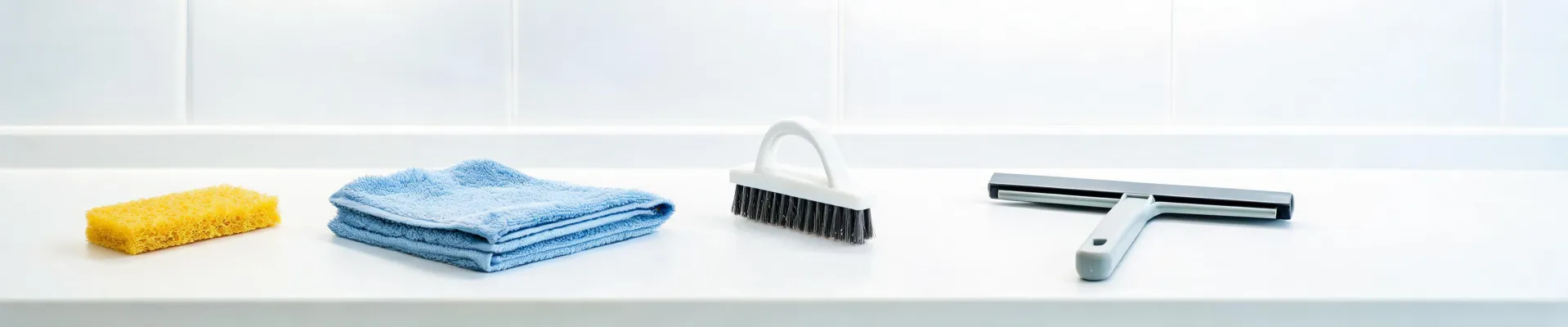
Picture this: you have just spent twenty minutes cleaning the shower, wiping the glass door with a microfiber cloth and a spray cleaner until it gleams. You step out, satisfied, and close the door. Two hours later, you catch a glimpse of the glass, and there it is again—a faint white film settling like dust on the surface. You wipe it, and it disappears, only to return when the water dries. This is not ordinary dirt. The film is a buildup of minerals and soap residue that your cloth has only pushed around. The real problem is not how hard you scrub, but whether you are using a tool that can actually break down what is on the surface.
When the White Film Comes Back
Imagine this: you have just spent twenty minutes cleaning the shower, wiping the glass door with a microfiber cloth and a spray cleaner until it gleams. You step out, satisfied, and shut the door. Two hours later, you glance at the glass, and there it is again—a faint white film settling like dust on the surface. You wipe it, and it disappears, but it returns when the water dries. This is not ordinary dirt. The film is a buildup of minerals and soap residue that your cloth has only pushed around. The real problem is not how hard you scrub, but whether you are using a tool that can actually break down what is on the surface.
Scotch-Brite, a product line made by 3M, exists because one cleaning tool cannot handle every surface. The brand's materials describe scouring pads and tools for home use that come in varying levels of hardness. That variety matters when you face a shower wall covered with white residue. A microfiber cloth is too gentle to break down the crystalline structure of hard-water scale, while a steel-wool pad would cut into the glaze of your tile. The middle ground—a medium-abrasive pad like the Swift Scrub—removes the buildup without harming the surface. That 3M builds an entire family of abrasives rather than one universal pad is a quiet argument: the correct level of abrasion matters more than raw scrubbing force. And that is the shift in thinking that turns a frustrating chore into a straightforward one.
Hard Water and Soap Scum: Two Culprits Working Together
Hard water is the first culprit. When water containing dissolved calcium and magnesium evaporates, it leaves solid mineral crystals. These form the white rings around faucets and cloudy spots on glass doors. They are not a wipeable film; they are tiny, jagged deposits anchored to the surface. Soap scum is the second culprit. In hard water, soap's fatty acids react with metal ions to form a sticky, waxy substance that coats tiles and grips residue. Together, they create a layered mess: a mineral base with a soapy film on top, each requiring a different removal strategy.
The bathroom's conditions make the problem worse. Warm, humid air speeds up evaporation, so every shower leaves a fresh layer of minerals behind. The splashing water carries dissolved solids onto every surface, and the heat keeps the water moving until it dries in place. Soap scum builds up gradually because it is not fully rinsed away; every shower adds a thin coat that over weeks turns into visible grime. If the bathroom is poorly ventilated, moisture lingers and gives deposits more time to set. That is why a quick wipe with a dry cloth never feels like enough—you are cleaning water from the surface, but the minerals and soap have already bonded to it, and dry friction alone cannot break those bonds.
The contrast between the two types explains why a single cleaning method fails. Water scale is hard and brittle, so it responds best to abrasion that scrapes off crystals in small pieces. Soap scum is soft and greasy, so it needs a cleanser that dissolves the fatty residue before abrasion can lift it. A strong acidic cleaner on soap scum may break down the mineral layer but leave the greasy film; a heavy abrasive on water scale may gouge the surface while the oily soap layer stays. The right approach is not to scrub harder but to pair the correct chemical action with a moderately abrasive pad that addresses both layers without being aggressive enough to cause damage.
Matching the Abrasive to the Surface
The Scotch-Brite product line, again from 3M, is built on the idea that abrasives are not interchangeable. The same brand that makes heavy-duty industrial discs also makes gentle sponges for dishwashing, and the difference is not just color—it is the level of hardness engineered into each pad. That distinction matters when you step into the bathroom. Swift Scrub sits in the middle of that range: abrasive enough to break down mineral and soap buildup, yet forgiving enough for glazed tile, glass, and stainless steel. This changes how you think about cleaning tools: you are not choosing between steel wool and a soft cloth, but between specific abrasive levels suited to different surface types. Soft plastics and acrylic can be scratched even by a medium pad, so they need a non-abrasive cleaner or a soft sponge.
How do you know which level is right for your bathroom? Start with the surface, not the product. Unglazed tile, stone, and fiberglass are more delicate than ceramic glazes, so a light touch is essential; test any pad in an inconspicuous corner before applying it to the whole wall. For glass shower doors and chrome fixtures, a medium abrasive pad like the Swift Scrub is a safe starting point—it removes mineral deposits without leaving the fine scratches that steel wool would. If you are unsure, run the pad across a hidden spot with light pressure; if the finish dulls or catches, step down to a softer option. The goal is to remove the buildup, not to polish the surface. In most cases, a medium pad with a bit of water and a short waiting period is enough.
Wet, Wait, Scrub: The Three-Step Sequence
Once you have the right pad, sequence matters more than force. Step one is to wet the surface thoroughly with water—warm water works best because it helps soften both mineral crystals and soapy film. Even if you use a cleaning product, a wet surface lets the pad glide instead of drag, and prevents scratching by carrying loose grit. You do not need to flood the area; a damp sponge or spray bottle with plain water is sufficient. The goal is to create a moisture layer between pad and buildup so the abrasion works on the deposit rather than the tile.
Step two is the one most people skip: wait. After wetting, let the water or cleaner sit on the buildup for a full minute. This pause is not wasted—it is the chemical half of the process. Soap scum absorbs moisture and loosens its grip; mineral crystals soften as water seeps into the microscopic cracks around them. Waiting separates a gentle wipe from a hard scrub. If you scrub immediately, you force the abrasive to break down dry, brittle deposits, demanding more pressure and more wear. Give the buildup a minute to soften, and the same pad removes it with far less effort. For thick or old deposits, extend the wait to two or three minutes before moving on.
Step three is the actual scrub, and the technique should be short and circular. Hold the Swift Scrub flat, apply light to medium pressure, and work in small circles—about the size of a coin—rather than long back-and-forth strokes. The circular motion hits the deposit from multiple angles, chipping away at mineral crystals. For hard-water scale, keep strokes short and firm; for soap scum, use lighter pressure and let the pad glide over the softened film. Avoid pressing harder; the pad is already doing the work, and extra force only increases scratching. Rinse the area thoroughly afterward to lift loosened buildup, then wipe dry with a clean cloth to prevent new water spots.
A Two-Minute Habit to Keep It From Returning
The best way to deal with bathroom buildup is to stop it from accumulating in the first place. A two-minute routine after each shower can keep glass and tile clear without a weekly deep scrub. Keep a Swift Scrub pad in the shower, and after washing yourself, spend two minutes wiping down the wet walls and glass with the pad and a little body wash or dish soap. You are not removing weeks of scale; you are disrupting the formation of a fresh mineral layer while it is still easily disturbed. This works because hard-water minerals and soap residue have not yet bonded during the shower—they are still suspended in water. A quick pass breaks the surface tension and sends most of the residue down the drain.
Taking care of the pad itself is just as important as using it. After each use, rinse the Swift Scrub thoroughly under running water to remove debris, then shake it out and let it dry in a ventilated spot. A damp pad left on the tub's edge can grow mildew, and a clogged pad loses effectiveness because debris acts as a cushion. Depending on how often you clean, replace the pad every month or two, or when the surface feels smooth and worn. A fresh pad has more bite, so you can use lighter pressure and get better results. That simple loop—wet, wait, scrub, rinse, dry—keeps the white film from settling in again.
Next time you wipe down the shower and let the glass dry, the film does not have to come back. The difference is not scrubbing harder; it is choosing a medium abrasive pad like the Swift Scrub, letting the water and cleaner do the first pass, and then working in short circles. That two-minute habit, repeated after each shower, turns the weekly battle into a simple rinse-and-wipe. The scene repeats, but the ending changes: the glass stays clear, and the white film finds nowhere to settle.

Ingrid Falk
Ingrid Falk is an outdoor living products analyst specializing in fences, pergolas, gazebos, canopies, greenhouses, shade sails, patio sets, outdoor sofas, and weatherproof cushions. She uses ISO 4892-2 and ASTM G154 weathering methods while comparing UV color change, coating adhesion, corrosion resistance, frame load, joint stability, water shedding, and dimensional movement. Her work helps garden retailers, project buyers, and hospitality operators select structures and furniture suited to wind exposure, climate, installation method, maintenance, and expected occupancy.