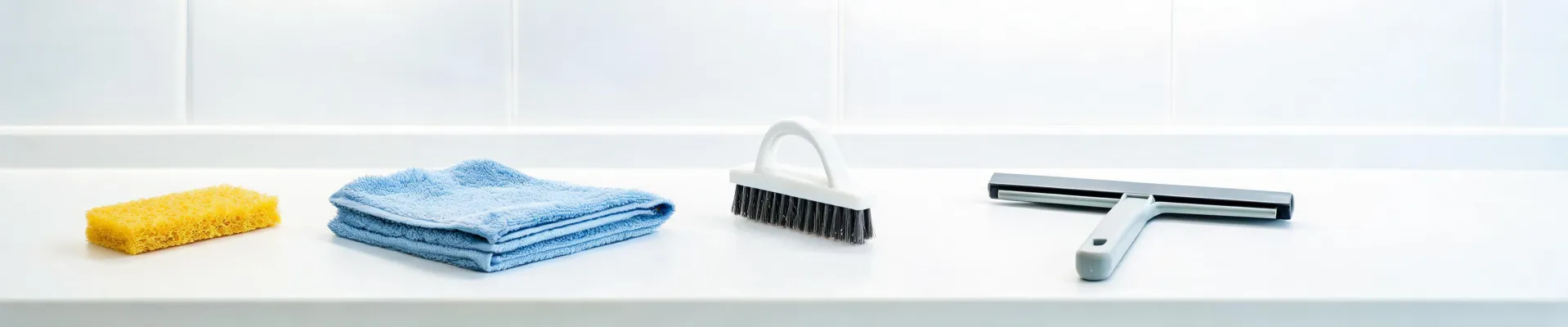
For fryer grease and greasy kitchen messes, the smart 3M Scotch-Brite approach is to match the abrasive level to the surface: heavy-duty for cast iron, non-scratch for nonstick, and soak-and-scrape for baked-on grime. There is no one perfect tool, but there is a perfect tool for each job.
The Hardest Scrub Isn't the Smartest Way to Clean a Fryer
I think the stiffest scouring pad is the single most overrated tool in the kitchen, and for fryer grease it is often the fastest way to create permanent scratches. The real skill is matching the abrasive to the surface you are cleaning, because a scrub that works on cast iron can destroy a nonstick coating in one pass. That claim might sound counterintuitive when baked-on oil stares back at you, but the evidence from 3M's own product line points the same way. Scotch-Brite is not one pad; it is a family of abrasive tools with deliberately different hardness levels, and the whole design logic assumes you will pick according to the task. If you treat every cleaning job as a contest of brute force, you will either damage the thing you are cleaning or spend extra time polishing out the marks you made. A softer, smarter choice can actually be faster overall, because it does not generate repair work. That is the stance I will defend: for frying oil and greasy residue, the fastest safe path is a system of matched tools, not one universal scrub.
3M's Scotch-Brite line is a documented case of intentional variation. According to the brand's own background material, the product range includes scouring pads for dish washing and scrubbing, plus industrial discs, belts, and rotating brushes, all manufactured with varying compositions and levels of hardness. That is not a marketing accident; it is the core mechanic. Hardness is the variable that lets the same brand serve a delicate nonstick skillet and a blackened cast-iron griddle. When I read that description, it confirms my belief that the right tool is the one whose abrasive character matches the surface's tolerance. The evidence also warns against treating any single pad as universal, because the manufacturer itself offers a spectrum, from gentle scrubbing sponges to aggressive heavy-duty pads. If 3M built a range, the user's job is to choose deliberately rather than grab the first pad in the drawer.
The stakes are concrete: a fryer basket with a nonstick coating can be ruined by a coarse abrasive in seconds. Once scratched, food sticks harder, cleaning takes longer, and the coating continues to degrade with every subsequent scrubbing session. Stainless steel and cast iron are more forgiving, but even they can develop a dull, hazy finish if you scrub against the grain or use a pad that is unnecessarily harsh. Beyond the cookware, there is the time multiplied across every future cleaning. A shortcut that forces you to re-polish a surface or re-season a pan is not a shortcut at all. What looks like efficiency in the moment becomes an endless loop of repair. That is why the decision about which Scotch-Brite tool to use deserves real thought, not habit.
Match the Abrasive to the Surface
Why would a softer sponge ever beat a heavy-duty scouring pad on greasy residue? The answer starts with what happens after the scrubbing stops. A coarse pad may lift the oil faster, but on a nonstick surface it leaves microscopic scratches that collect the very oil you are trying to remove. The next cleaning then requires even more force, and the cycle repeats. On the other hand, a non-scratch scrub takes longer on the first pass but leaves the surface smooth, so the following cleanups get easier rather than harder. When you add up the time across a month of frying, the gentler option often wins. This is not about being timid; it is about accounting for the full cost, including the repair work that a harsh pad creates. The real question is how you define speed: one fast pass versus a dozen fast passes after your coating fails.
The mechanism becomes clearer when you look at how durable kitchen products are designed and reviewed. In a category roundup of food storage containers, the top picks are praised for being durable, leakproof, and easy to clean — qualities that reduce maintenance over time. That same logic applies to cleaning tools: a tool that protects the surface and resists buildup lowers your total workload. Commercial kitchen gear reinforces the point. Rubbermaid's round storage containers, built for foodservice, emphasize features like dishwasher safety, a temperature range of 35°F to 150°F, and NSF certifications for hygiene. Those are not arbitrary specs; they are signals that commercial users need tools which survive heavy use without degrading the items they touch. Translating this to a fryer, a non-scratch Scotch-Brite pad is the equivalent of an easy-clean finish: it does the job without creating secondary damage. That is exactly the principle behind a non-scratch pad: it lifts grease without adding microscopic cuts. In practice, this means fewer passes and less elbow grease over the life of the pan.
So the first rule is straightforward: use a coarse abrasive only on surfaces that are heat-proof, scratch-resistant, and built for abuse — cast iron, uncoated stainless steel, or ceramic enamel. Reserve the non-scratch and medium-duty pads for nonstick coatings, anodized aluminum, and anything with a finish you want to preserve. For extremely burnt-on fryer grease, the rule adds another step: soak first, then use a scraper or a heavy-duty pad only if the surface tolerates it. If a nonstick basket has blackened residue, never attack it with a steel-wool pad; a nylon scraper and warm soapy water will lift most of the crust without damaging the coating. This rule does not promise magic; it promises a smaller chance of ruining your equipment.
What Durable Kitchen Products Teach Us About Cleanup
What separates a good kitchen product from a frustrating one often comes down to a few measurable traits. An editor's long-term review of Rubbermaid Brilliance containers notes that over 103,000 five-star ratings back the line, which speaks to consistent satisfaction. The containers are made of BPA-free plastic, seal tightly, and are safe for dishwasher and freezer use — practical details that reduce cleaning effort. The reviewer also mentions that after four years, the containers still look good and keep contents like brown sugar fresh. That longevity is exactly the quality I look for in a cleaning tool. A Scotch-Brite pad or scrubber that maintains its shape, resists odor, and does not shed debris will serve you far longer than a cheap sponge that disintegrates after a week. The evidence suggests that durability and easy maintenance are not luxuries; they are the baseline for anything you use daily.
The same category evidence points to a broader pattern. In the food-storage container tests, the containers that won were those with secure lids, clear construction, and stain resistance — features tied directly to how much work the owner must do. If a lid leaks or a surface stains, the container becomes a daily annoyance. The analogy to cleaning tools is direct: the tool itself must resist the mess it is meant to remove. A scouring pad that clogs with grease, holds odor, or falls apart is creating the same kind of invisible tax. That is why Scotch-Brite's line includes synthetic pads that rinse clean and resist bacterial buildup; the material is chosen to make the tool easy to maintain. When you evaluate a cleaning product, ask not only how well it scrubs but how well it sheds soil, because that determines whether the tool stays usable.
From these examples, I would distill a short quality checklist for a fryer cleaning tool. First, it should be abrasive enough for the worst surface you own but gentle enough for the most delicate one, which usually means having multiple tools rather than one compromise. Second, it should rinse clean and dry quickly, because a pad that holds oil becomes a bacteria farm. Third, it should not shed particles that embed in cookware. Fourth, it should be durable enough to survive repeated use without crumbling. Fifth, and most important, it should match the specific surface you are cleaning; a universal 'kitchen' pad that works everywhere usually works poorly everywhere. These criteria turn a vague shopping instinct into a decision you can defend.
A Simple Decision Rule for Fryer Grease
Here is the decision rule I use when I face a greasy fryer. Step one: identify the surface. If it is cast iron or uncoated stainless steel, you have permission to use a heavy-duty Scotch-Brite pad, because those materials can handle aggressive abrasion without permanent damage. Step two: if the surface is nonstick, polished aluminum, or anything with a coating, switch to a non-scratch or medium-duty scrub, and pair it with a plastic scraper. Step three: check the soil level. For light to moderate grease, a medium pad with warm soapy water is enough. For baked-on crust, soak the part in hot water and degreaser for ten to fifteen minutes, then scrape with a nylon scraper before you even pick up a pad. Only for truly charred crud on a scratch-resistant surface do you escalate to the coarsest pad, and even then you scrub gently with the grain. This rule forces you to think before you scrub, which is exactly what saves your cookware.
The value of a surface-conscious approach shows up in how product manufacturers engineer their materials. Rubbermaid's Brilliance pantry containers, for instance, are described as stain- and odor-resistant, with tight seals that keep food fresh. Those are exactly the properties that reduce cleaning effort: a canister that resists stains does not need harsh scrubbing, and a clean container invites reuse. Apply the same lens to fryer cleaning tools: a non-scratch pad that resists grease buildup avoids the need for aggressive scrubbing in the first place. The evidence supports the idea that the best cleaning method is one that prevents the mess from getting worse. When you match the tool to the surface, you are not just solving today's stuck-on oil; you are protecting the surface so that tomorrow's cleanup is easier. That is the real mechanism behind the decision rule.
No decision rule is free of trade-offs. The heavy-duty pad will always remove baked-on crud faster than a gentle scrub, which is why, on a surface that can take it, it remains the right call. On a delicate nonstick basket, you sacrifice a little immediate scrubbing power in exchange for not losing the coating. Likewise, a soaking step costs time upfront but typically reduces total effort and risk. There is also the question of cost: a set of matched tools costs more than a single all-purpose pad, but it saves money in the long run by preventing cookware replacement. The honest trade-off is this: you are trading a few seconds of brute force for years of useful life. When I weigh that exchange, the matched-system approach wins, even on days when I wish a stiff pad would just make everything disappear.
The Verdict: Build a System, Not a Single Tool
The verdict is that the smart 3M Scotch-Brite approach to fryer and kitchen cleaning is a system, not a single tool. The thesis I set out to defend — match the abrasive level to the surface — holds up against the evidence. The product line itself is built around varying hardness, which tells you the manufacturer expects you to choose. The category evidence from durable kitchen goods shows that easy-clean and stain-resistant properties win over brute force. And the practical decision rule I outlined — heavy-duty for cast iron, non-scratch for nonstick, soaking and scraping for baked-on grime — gives you a repeatable method. There is no one perfect tool, but there is a perfect tool for each job. Buying three targeted scrubbers is more effective than hunting for one magic sponge. That is my verdict, and it has held through every greasy aftermath I have handled.
Before you run out and buy a full arsenal, note the boundary conditions. The evidence also shows that Scotch-Brite pads come in many compositions and hardness levels, so you still need to read labels and match the specific product to the task. A 'non-scratch' designation on one pad does not make every soft-looking pad safe for a given coating; you have to verify the product's intended use. Similarly, the decision rule assumes you are cleaning a fryer at home, not a commercial fryer in a restaurant. Commercial environments may need specialty tools and more aggressive schedules. And no tool can rescue a coating that is already failing; if your nonstick basket is flaking, replace it rather than blaming your cleaning method. The system works within these boundaries, and respecting them is part of the rule.
I opened by saying that the stiffest scouring pad is overrated, and that is where this article lands. The next time you stare at a crusted fryer basket, resist the instinct to reach for the harshest abrasive in the drawer. Look at the surface, look at the soil, and apply the rule: heavy-duty pads for cast iron, non-scratch pads for nonstick, and a soak-and-scrape routine for the burnt-on worst. That routine is not glamorous, but it is the difference between cleaning once and cleaning forever. The hard truth of kitchen maintenance is that the match matters more than the muscle. Choose the abrasive for the surface, and the fryer — and your cookware budget — will thank you.
Matching the abrasive to the surface is the only way to clean a fryer without wrecking it.

Ingrid Falk
Ingrid Falk is an outdoor living products analyst specializing in fences, pergolas, gazebos, canopies, greenhouses, shade sails, patio sets, outdoor sofas, and weatherproof cushions. She uses ISO 4892-2 and ASTM G154 weathering methods while comparing UV color change, coating adhesion, corrosion resistance, frame load, joint stability, water shedding, and dimensional movement. Her work helps garden retailers, project buyers, and hospitality operators select structures and furniture suited to wind exposure, climate, installation method, maintenance, and expected occupancy.