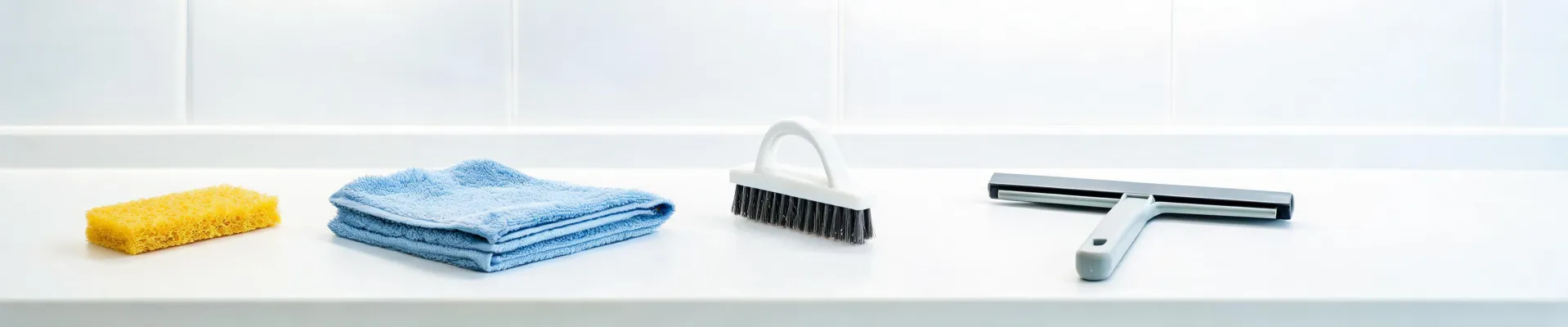
Yes, the 3M Scotch-Brite Heavy Duty Gray Cleaning Pad 901 is a legitimate heavy-duty cleaning tool that can cut through burnt food, grease, and grime on hard, uncoated surfaces. It is not, however, a universal scourer: the same abrasive texture that makes it effective can scratch soft plastics, polished coatings, and non-stick cookware. The key is matching the pad to the job and testing first—a process we cover in detail below.
The Short Answer: Yes for Heavy-Duty Messes
For heavy-duty scrubbing on hard surfaces, the 3M Scotch-Brite Heavy Duty Gray Cleaning Pad 901 is a legitimate buy. Its coarse abrasive web cuts through burnt-on food, dried paint, and garage grime with little effort, and the pad holds its shape under strong pressure. The catch is that the same aggressiveness can damage soft plastics, acrylic, or coated cookware, so you must test it on an inconspicuous spot before a full pass. That is the direct answer: yes for tough jobs, but only with a test and only on surfaces that can tolerate the abrasion. It is not a universal sponge; it is a purpose-built tool for serious cleaning.
The trust in this pad begins with the Scotch-Brite name, a product line made by 3M. The brand is a well-known maker of abrasive tools for both home kitchens and industrial settings, which means the gray 901 comes from a company that understands surface conditioning. According to product-line descriptions, Scotch-Brite offers scouring pads and tools with varying compositions and hardness levels, covering everything from delicate dishwashing to heavy industrial abrasives. That range tells you the gray pad is a deliberate choice within a family of graded products, not an accident. When a manufacturer sells multiple hardness levels, you can assume each one is tuned for a specific job, and the 901 is tuned for tough cleaning.
Hardness and Composition: What Makes Gray Pads Tough
The gray 901’s toughness comes from its abrasive structure, but the key fact is that not all Scotch-Brite pads are alike. The same brand makes everything from fine scouring pads to aggressive industrial discs, with different compositions and hardness. So 'gray' is a useful clue, not a complete specification. In the household lineup, the 901 sits on the heavier side, with a dense, coarse web that digs into residue without breaking down. Hardness, here, means the pad can apply strong cutting force before the abrasive wears out. That is why it is labeled heavy-duty.
That hardness range explains why the same company sells a delicate blue pad for non-stick pans and a rough brown one for industrial cleaning. The gray 901 is clearly on the aggressive side: it is built to remove tough residue quickly, not to protect polished finishes. When you press it on a burnt pot, the coarse strands flex slightly and then bite into the gunk, lifting it in layers. On a soft surface, however, those same strands can scratch the finish. The practical takeaway is that you must understand the mechanism: the pad is a cutter, not a polish. Use it where cutting is needed, and avoid it where scratching would be a problem.
Reach for the Gray 901 When...
Reach for the gray 901 when you face a mess that has defeated sponges and nylon brushes. Imagine a stainless steel pot with a blackened layer of dried soup, or a garage workbench with years of grease ground into the surface. The pad’s coarse texture breaks down that kind of stubborn residue without endless scrubbing. It also works on uncoated cast iron, ceramic stovetops with care, and metal tools. The ideal surface is hard, smooth, and uncoated—something that can’t be scratched easily. Anything polished, clear-coated, or soft, like acrylic or plastic, should not be touched by this pad.
The condition for every use is that the surface must be harder than the abrasive. That rule rules out non-stick fry pans, plastic lids, acrylic sinks, and any decorative coating. On those materials, the gray 901 leaves fine scratches that are visible in light. It also sheds fibers on rough concrete, so do not use it where it is outclassed by the surface. Before starting, ask one question: 'Am I willing to risk this surface?' If the answer is no, switch to a softer pad. This single check prevents most accidental damage and makes the pad safe to use.
Testing the Pad on Your Surfaces
Before covering a large area, run a fifteen-second test. Choose an inconspicuous spot—the underside of a lid, the back edge of a countertop, or a hidden corner of a workbench. Dampen the pad with water or a mild cleaner, rub gently in a small circle, then wipe and inspect under good light. Look for hazing, dullness, or scratches. If the spot looks unchanged, proceed; if you see any mark, switch to a gentler pad. This simple protocol takes less than a minute, but it turns a risky guess into a confident decision.
Professional testers never rely on marketing claims; they run controlled trials on realistic surfaces. In category reviews, whether for food containers or cleaning tools, experts use standardized tests to see what holds up. For a scouring pad, the equivalent is a scratch test on the exact material you plan to clean. That is why testing first is not paranoid—it mirrors the methodology behind every 'tested & reviewed' article. Experts push products to their limits and then report what survived. When you test the gray 901 on your own pot or pan, you are running that same test on a small scale. The evidence from category testing shows that surface compatibility is a top criterion, not an afterthought.
Where the 901 Fits in the Scotch-Brite Family
Within the Scotch-Brite family, the gray 901 sits between the white and green general-purpose pads and the brown or black industrial grades. It is tougher than everyday scouring pads but not as aggressive as professional stripping tools. That middle-heavy position makes it a practical choice for households that need real scrubbing power without going industrial. The 901 is often called heavy-duty because it can remove baked-on food while still being gentle enough for occasional stainless steel use. But it isn’t for every job. For light dishwashing, a softer pad is better; for stripping paint, you need something harsher. Knowing this slot tells you what it can and cannot do.
The real rule for choosing a pad is: match hardness to the surface and aggressiveness to the soil level. A burnt pot needs a hard pad with coarse abrasive, so the gray 901 fits. Non-stick pans need a soft pad, so a green or blue one works. For a garage floor, you might need an even more aggressive product. This framework is why you should think about your surface first, not the color or model number. The 901 is one point on a spectrum, not a universal answer. When you see the full Scotch-Brite range, you realize the right pad is always relative to the task.
The Verdict: Buy or Skip?
Verdict: buy the 3M Scotch-Brite Heavy Duty Gray Cleaning Pad 901 if your main need is removing tough, baked-on messes from hard surfaces like stainless steel, cast iron, and uncoated ceramic. It does that job well and comes from a trusted brand. The real risk is its aggressiveness, so the purchase is only wise if you will follow the test-first rule every time you face a new surface. For people who often clean non-stick cookware, soft plastics, or polished finishes, this pad will likely cause damage. In that case, a gentler pad is the better investment.
The boundary condition is clear: use the pad only on surfaces that can tolerate its abrasive texture, and always test in a hidden spot first. If you see scratching, stop and switch to a softer Scotch-Brite product. The pad thrives in specific conditions—high soil, hard surfaces, and a careful user. Under those conditions, it delivers the cleaning power you expect. Outside them, it becomes a liability. So the final judgment is conditional: yes for heavy cleaning on hard surfaces, no for delicate materials, and always with a test. That is the honest recommendation, and following it will extend the life of both your pad and your cookware.
The verdict is straightforward: the 3M Scotch-Brite Heavy Duty Gray Cleaning Pad 901 earns its place in any toolbox that faces serious grime, provided you remember to test first and respect its limits. For hard surfaces and heavy soil, it is a dependable workhorse. For anything delicate, leave it on the shelf and reach for a softer pad. That conditional judgment—backed by a quick test—is the only way to get the most from this aggressive little tool.

Ingrid Falk
Ingrid Falk is an outdoor living products analyst specializing in fences, pergolas, gazebos, canopies, greenhouses, shade sails, patio sets, outdoor sofas, and weatherproof cushions. She uses ISO 4892-2 and ASTM G154 weathering methods while comparing UV color change, coating adhesion, corrosion resistance, frame load, joint stability, water shedding, and dimensional movement. Her work helps garden retailers, project buyers, and hospitality operators select structures and furniture suited to wind exposure, climate, installation method, maintenance, and expected occupancy.