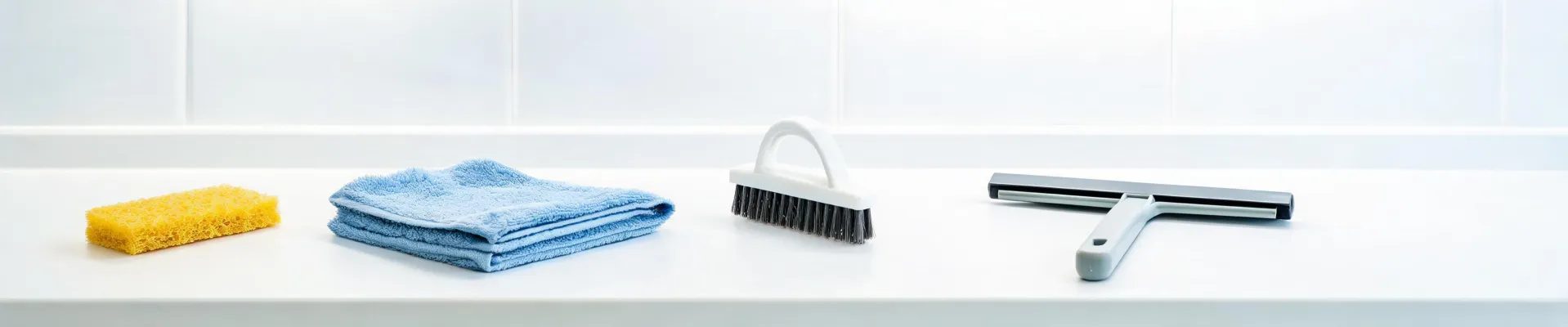
Need a no-nonsense heavy-duty gray pad? Put the 3M Scotch-Brite 901 on your shortlist when an abrasive from the trusted Scotch-Brite line fits the task. Verify the model's surface compatibility on the official spec sheet first, because gray and heavy-duty are cues, not guarantees. Abrasive rating is the deciding fact.
Start here: the 901 for heavy-duty gray cleaning
Need a no-nonsense heavy-duty gray pad for baked-on grime? The 3M Scotch-Brite 901 is the model a buyer should weigh first, because the Scotch-Brite line is 3M's abrasive family for home dish washing, scouring, and industrial finishing work. That brand grounding supplies the opening answer: shortlist the 901 for tough gray-pad jobs, then confirm that its documented abrasive rating fits your surface before you scrub. The same evidence warns why the condition matters—this abrasive line includes pads with varying compositions and levels of hardness, so a gray model is not automatically safe on every finish. In practical terms, the 901 earns its heavy-duty gray label only when its spec sheet says the surface you are cleaning is acceptable.
The condition on that recommendation is not a formality. If you scrub a stainless-steel sink with a pad whose abrasive grain is too aggressive for that finish, you can leave fine swirl marks; if you choose too soft a pad for baked-on residue on cast iron, you waste time. The usual gray cleaning pad is an abrasive tool, and abrasive tools are defined by their grit and hardness, not by their color. The rest of this guide walks you from a vague 'gray heavy-duty' label to a surface-matched check, so the 901 either earns a place in your cleaning kit or gets ruled out before you buy. That sequence turns buyer anxiety into a simple spec-to-surface comparison.
Read 'gray heavy-duty' as a starting point, not a spec
Scotch-Brite pads are not interchangeable, and this is the mechanism behind the buying trap. The Scotch-Brite line produced by 3M includes scouring pads for home dish washing and scrubbing plus a broader set of surfaces for industrial applications, and those pads arrive with varying compositions and levels of hardness. That evidence changes the decision: a gray pad in one product family can be substantially gentler or noticeably more aggressive than a gray pad in another, even if both carry the same color. The label 'heavy duty' hints that a pad is built for tougher work, but it does not put a number on the abrasive level; that number lives in the official spec sheet.
If gray and heavy-duty are only rough cues, what actually separates a 901 from a safer or rougher pad? The answer is the abrasive grain and hardness rating that 3M documents for the specific model. A shopper who asks 'is it gray?' is asking the wrong question; the useful question is 'what surface is this gray pad rated for?' Asking that resets the buying process: instead of trusting a familiar color, you compare documented pad properties to your cleaning surface. The gray pad's job is to remove soil without machining the material beneath it.
For this guide, 'your task' means the material you plan to scrub and the type of soil you need to remove. A soft metal sink, a nonstick pan, a painted appliance, and bare cast iron all sit at different points on a scratch-resistance scale. A gray high-performance pad that is perfect for carbonized residue on cast-iron skillets can dull a glossy sink if used the same way. Use this definition when you shop: match the pad's documented abrasive level to the surface's tolerance, then choose the least aggressive pad that will do the job. Surface tolerance is the limiting factor in every heavy-duty choice.
Check your surface before you choose
How do you turn that definition into a purchase decision? Begin with the surface, not the pad. Pick the hardest cleaning job you intend to use the pad on, identify the surface material, and note whether it is coated, polished, or bare. Then ask whether the 901's official documentation lists that material as acceptable. If the manufacturer does not say a surface is safe, treat it as unverified rather than assume the gray pad is safe because it looks like a light-duty sponge. Surface first is the rule that keeps scrubbing power from becoming scratch damage. The surface dictates how much abrasiveness the pad may carry.
The decision component condenses to a three-line check you can run before opening the spec sheet. First, classify the surface: stainless steel and enameled cast iron are mid-tolerant; nonstick coating and polished acrylic are low-tolerance; bare carbon steel and uncoated cast iron can handle more aggressive pads. Second, name the job: light grease, baked-on food, or rust-like residue. Third, match the official 901 spec to both surface and soil. A supporting category note says exactly this: use the pad family's advice only as a selection filter, then confirm the model-specific spec on official pages. The evidence does not prove every gray pad works on every surface; it proves the line varies, and that variation is why the spec step exists.
Confirm 901 specs like a pro
The dependable way to confirm the 901 is to go to the source. Find the official 3M or Scotch-Brite product page for the 901 model and locate the abrasive rating, recommended surfaces, and cautions. The available evidence makes this the decisive step: category-level guidance can filter your options, but you should confirm Scotch-Brite-specific specs on official documentation. One lookup changes the reasoning from 'gray probably works' to 'the manufacturer says this heavy-duty pad is rated for your sink.' No listed surface means move on or contact support.
Why prefer the official spec over the color? Because the Scotch-Brite family is intentionally broad. Within 3M's abrasive line, some pads are formulated for gentle everyday cleaning and others for aggressive industrial finishing, and similar shades of gray can appear on different tiers. When you read the official product data, you are reading the supplier's own statement about grain, hardness, and intended use—not a guess based on the pad's shade. That is the evidence turning point: brand credibility establishes that Scotch-Brite makes dependable abrasives, but it does not establish that one gray model is right for a particular finish. The spec sheet is the tie-breaker between scrubbing power and surface safety.
Use four checks when you review that page: the abrasive level or type, the list of recommended surfaces, any phrase like 'safe for stainless steel' or 'not for nonstick,' and the stated duty rating. If the page says heavy duty and lists metal surfaces but never mentions coating-safe use, treat coated cookware as off-limits. If the page is missing, look for a datasheet link or contact the manufacturer directly. A pad that cannot be identified by spec is not something to trust with a polished surface.
Put the 901 to work in your cleaning routine
Once your surface check passes, the 901 fits into a routine that protects the finish. Imagine a stainless-steel sink with a ring of greasy residue and baked-on bits around the drain. After you test the pad on an inconspicuous spot and you have confirmed the official spec allows the surface, wet the area, apply your usual cleaner, and scrub with moderate pressure in short circular motions. The gray heavy-duty structure should break down the residue without demanding excessive force; let the abrasive do the work. Rinse, wipe, and inspect before applying more pressure, because you can always repeat a pass but cannot easily undo a scratch.
The precautions protect both surface and user. Never scrub a glossy or coated surface unless the official documentation names it; a single pass can leave permanent micro-scratches on a polished finish. Use the pad wet on delicate materials to reduce friction, and keep the pad clean and dry between uses to discourage bacteria. If heavy-duty abrasives are new to you, start with light pressure on the least visible area and increase force only after you see no marking. A cautious first use is considerably cheaper than refinishing a scratched sink.
Make the 90-second gray pad decision
Whenever you hold a gray heavy-duty pad and wonder whether it will solve your problem, run the 90-second rule. Name the exact surface and the soil type; find the 901 on an official 3M or Scotch-Brite page; verify that the documented abrasive level and recommended uses cover your surface. If the spec matches, the 901 is a strong choice for heavy-duty gray cleaning. If the spec is silent about your surface, pass on the pad and choose a model with a clearer safety rating. This single rule resolves the power-versus-safety conflict: you keep the scrubbing power you need and use documentation to protect the finish.
The verdict for most heavy-duty gray cleaning jobs is conditional: choose the 3M Scotch-Brite 901 when its official spec sheet matches the surface you intend to clean. Gray is not a guarantee, and brand trust is not a substitute for documentation. Start with the surface, verify the model, then scrub—that is the reusable judgment for this pad and for every similarly colored abrasive. If the official page does not cover your finish, the 901 is not a failure as a product; it is simply the wrong match for your sink, pan, or workbench. Keep it out of your cart until you can confirm compatibility.
The gray pad on the shelf is a starting point, not the final answer. Name your surface, confirm the 901 spec on an official page, and let that document decide. Do that and the heavy-duty gray 901 either earns its place in your cleaning drawer or stays on the shelf until it is the right tool.

Ingrid Falk
Ingrid Falk is an outdoor living products analyst specializing in fences, pergolas, gazebos, canopies, greenhouses, shade sails, patio sets, outdoor sofas, and weatherproof cushions. She uses ISO 4892-2 and ASTM G154 weathering methods while comparing UV color change, coating adhesion, corrosion resistance, frame load, joint stability, water shedding, and dimensional movement. Her work helps garden retailers, project buyers, and hospitality operators select structures and furniture suited to wind exposure, climate, installation method, maintenance, and expected occupancy.